
Auto Insurance Deductibles: How They Work and How to Choose One


Photo: SmartGlobetrotter.net editorial
Key Takeaways
- A deductible is the amount you pay out of pocket before your insurer covers the rest of a covered claim.
- Choosing a higher deductible generally lowers your monthly premium, but increases your cost at claim time.
- Deductibles typically apply to collision and comprehensive coverage, not to liability coverage.
- Your savings account balance and how often you file claims should both shape your deductible choice.
- The right deductible amount depends on your financial situation, not a single universal rule.
What a deductible actually does in an auto insurance policy
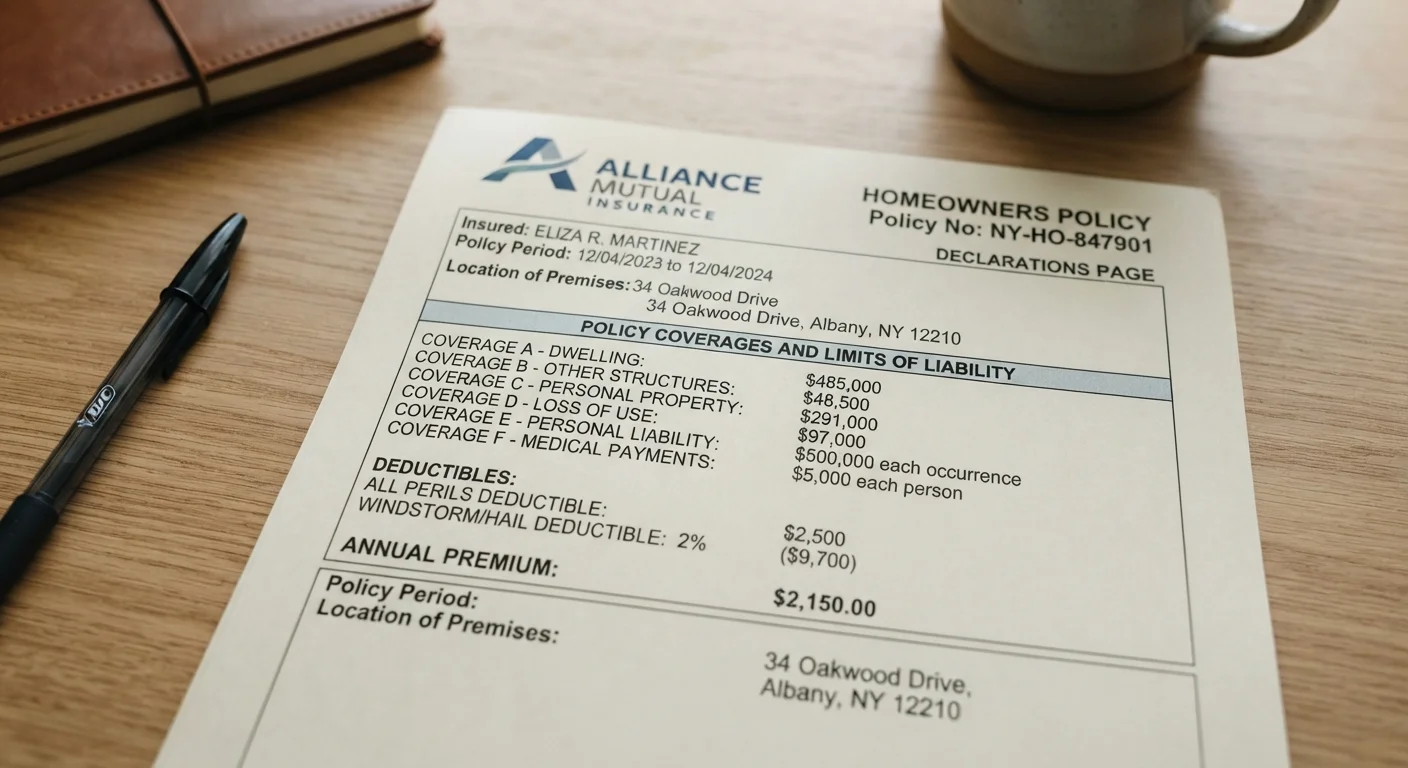
Many drivers know their deductible is a number on their policy, but fewer understand exactly how it affects a real claim. A deductible is not a fee you pay regularly. It is the portion of a covered claim you absorb before the insurer pays the balance. This arrangement lets insurers price premiums based on how much risk they carry per claim, and it gives you some control over that price through the amount you choose.
Auto insurance deductibles work differently from health insurance deductibles. Unlike health insurance, where a single annual deductible often applies across many expenses, auto deductibles are triggered per claim. Filing two claims in one year means you pay your deductible twice. For a plain-English look at how health insurance deductibles compare, see deductibles, copays, and coinsurance explained.
It is also worth knowing that insurers can apply deductibles differently in specific situations, such as claims involving an uninsured driver. Read your policy or ask your agent about any scenario-specific rules before assuming your standard deductible always applies.
Be aware of a few auto insurance beliefs that sound logical but are not always accurate. The auto insurance myths that lead to costly surprises article covers several misunderstandings that affect how drivers choose their coverage levels.
What you will need
How to choose the right deductible amount
There is no single correct deductible for every driver. The right amount depends on your financial cushion, how much you drive, your vehicle's value, and the premium difference between options available to you.
Current auto insurance policy or quote documents
Lets you see your existing deductible amounts and premium costs for direct comparison.
Calculator or spreadsheet
Helps you run the break-even math between a higher deductible and a lower premium.
Emergency or savings fund balance
Confirms whether you can comfortably cover your deductible amount without hardship if a claim occurs.
Understand what a deductible is and when it applies
A deductible is the fixed dollar amount you agree to pay toward a covered claim before your insurer pays the remaining repair or replacement costs. If your vehicle sustains $3,000 in damage and your deductible is $500, you pay $500 and your insurer covers $2,500.
Deductibles apply specifically to collision coverage (damage from accidents involving another vehicle or object) and comprehensive coverage (damage from theft, weather, falling objects, and similar events). Liability coverage, which pays for damage or injuries you cause to others, does not carry a deductible.
Learn how your deductible affects your premium
Your premium is the amount you pay periodically (monthly or annually) to keep your policy active. The deductible and the premium move in opposite directions: a higher deductible means the insurer takes on less financial risk per claim, so the insurer charges a lower premium. A lower deductible shifts more risk back to the insurer, which raises the premium.
Common deductible amounts in the U.S. range from $250 to $2,000. The premium savings from raising your deductible from $500 to $1,000 vary by insurer, vehicle, and location, so comparing actual quotes is the only reliable way to measure the difference for your situation.
For more on why premiums differ between drivers, see why auto insurance premiums vary between drivers.
Calculate your break-even point
Before raising your deductible, calculate how long it takes for the premium savings to offset the extra out-of-pocket cost at claim time. The formula is straightforward:
- Find the annual premium difference between two deductible options (for example, $500 vs. $1,000).
- Find the difference in deductible amounts ($500 in this example).
- Divide the deductible difference by the annual premium savings. The result is the number of years it takes to break even.
If raising your deductible saves $80 per year and costs you $500 more per claim, you would need more than six claim-free years to come out ahead. If you file a claim sooner, the higher deductible costs you more overall.
Assess what you can realistically afford to pay after an incident
Your deductible is a bill that arrives at the worst possible time, right after an accident or vehicle loss. The amount you choose should be one you can pay without serious financial strain, even on short notice.
Review your liquid savings (money you can access quickly without penalties). If your emergency fund covers your deductible comfortably, a higher deductible may be reasonable. If paying $1,000 tomorrow would leave you unable to cover other essentials, a lower deductible is a safer choice, even if it costs more each month.
Factor in your vehicle's age and value
A deductible that makes sense for a newer vehicle may not make sense for an older one. If your car's current market value is close to or below your deductible, a claim payout after the deductible is subtracted could be very small, or even zero.
Drivers of older, lower-value vehicles sometimes drop collision or comprehensive coverage entirely rather than carry a deductible for minimal potential benefit. A licensed insurance agent can help you evaluate whether maintaining these coverages is worthwhile given your vehicle's value.
Compare quotes with multiple deductible options before deciding
Once you understand the trade-offs, gather quotes that show your actual premium at two or three different deductible levels. This comparison gives you the real numbers for your situation rather than estimates.
When reviewing quotes, also confirm what each policy covers and excludes. A lower premium with gaps in coverage may leave you exposed when you file a claim. To avoid common coverage errors, see coverage mistakes drivers commonly make.
This article is for general informational purposes only and does not constitute personalized insurance advice. Coverage terms, deductible options, and premiums vary by insurer, state, and individual circumstances. Consult a licensed insurance agent or broker for guidance specific to your situation.
The content provided on our blog site traverses numerous categories, offering readers valuable and practical information. Readers can use the editorial team’s research and data to gain more insights into their topics of interest. However, they are requested not to treat the articles as conclusive. The website team cannot be held responsible for differences in data or inaccuracies found across other platforms. Please also note that the site might also miss out on various schemes and offers available that the readers may find more beneficial than the ones we cover.