
Auto Insurance Myths That Can Lead to Costly Surprises

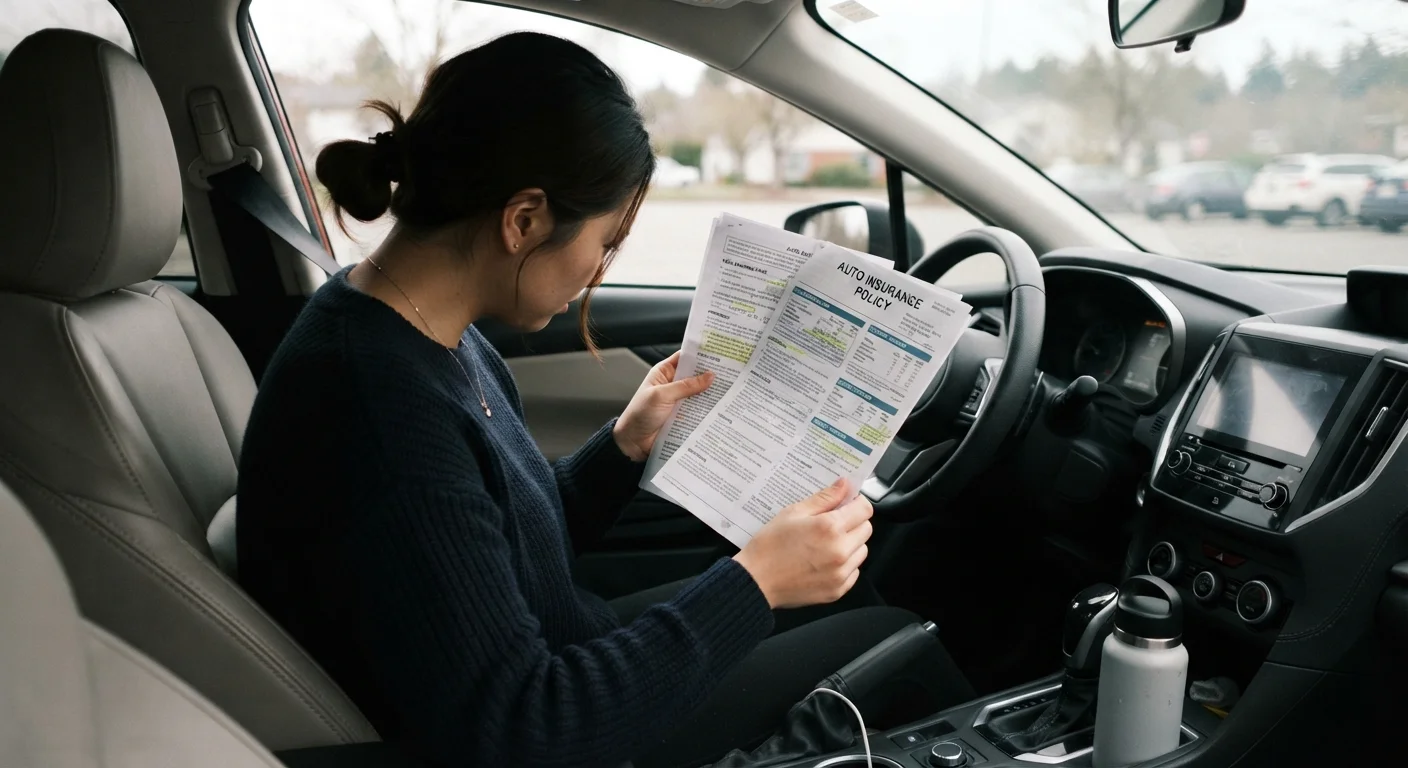
Photo: SmartGlobetrotter.net editorial
Key Takeaways
- Car color has no effect on auto insurance premiums; insurers do not track it.
- Standard personal auto policies typically exclude coverage during business or rideshare use.
- Minimum state liability coverage protects other drivers, not your own vehicle or medical costs.
- Comprehensive coverage pays for theft and weather damage, not collision damage.
- Your credit history can legally affect your premium in most U.S. states.
- A lapse in coverage, even brief, can raise your rate when you reinstate a policy.
Why insurance myths are more than minor misunderstandings
Auto insurance is a contract. What you believe about it and what the policy actually says can be two very different things, and the difference matters most at the worst possible moment: after an accident or loss. Myths about how coverage works often lead drivers to skip protections they need or assume coverage exists where it does not.
This article addresses six beliefs that regularly mislead drivers who are in the early stages of comparing policies. Each myth is paired with a factual correction and context that explains why the distinction matters in practice.
This article is for general informational purposes only and is not legal or insurance advice. Policy terms, coverage rules, and state regulations vary. Read your policy documents carefully and consult a licensed insurance agent for guidance specific to your situation.
Myth
Red cars cost more to insure because insurers charge extra for that color.
Fact
Insurers do not ask for or record vehicle color. Your premium is based on the make, model, body type, engine size, age of the vehicle, and your driving history.
This belief has persisted for decades, but no U.S. insurer uses paint color as a rating factor. When you apply for a policy, the insurer pulls your vehicle identification number (VIN) to confirm the year, make, model, and trim level. Color does not appear in that data. What does affect your rate includes the vehicle's safety record, repair costs, theft frequency for that model, and your personal driving history.
Myth
Personal auto insurance covers you while driving for work, including rideshare or delivery.
Fact
Personal auto policies almost always exclude commercial or business use. Rideshare and delivery driving typically require a separate endorsement or a commercial policy.
A standard personal auto policy is written around personal, family, and leisure use. The moment you use your car to transport paying passengers or deliver goods for compensation, most policies treat that as a business activity and deny claims arising from it. Many rideshare companies provide some coverage during active trips, but there is often a gap between when you log in to the app and when you accept a ride. Drivers who do any compensated driving should ask their insurer specifically about a rideshare or business-use endorsement. See common coverage mistakes drivers make for related gaps that can leave you exposed.
Myth
State minimum liability coverage is enough protection for most drivers.
Fact
State minimums set a floor, not an adequate level of protection. A serious accident can exceed those limits quickly, leaving you personally responsible for the remainder.
Liability coverage (the type required in nearly every state) pays for injuries and property damage you cause to others. It does not pay to repair your car or cover your own medical bills. State minimums vary, but many are set at levels that were established years ago and do not reflect current medical or vehicle repair costs. If a court judgment exceeds your liability limit, your wages, savings, and assets can be targeted to cover the difference. What liability coverage pays for and what it does not breaks down those boundaries in detail.
Myth
Comprehensive coverage pays for all types of damage, including accidents.
Fact
Comprehensive coverage only pays for damage from events other than a collision, such as theft, fire, hail, flooding, or animal strikes. Collision damage requires separate collision coverage.
Despite the name, comprehensive does not cover everything. It is specifically designed for losses outside your control that are not vehicle-to-vehicle or vehicle-to-object impacts. If a tree falls on your car, comprehensive applies. If you back into a pole, you need collision coverage. Many drivers carry comprehensive without collision, or vice versa, and discover the gap only when they file a claim. Understanding which coverage type applies to which scenario helps you build a policy that actually matches your risk.
Myth
Your credit score cannot affect your auto insurance rate.
Fact
In most U.S. states, insurers use a credit-based insurance score as one factor in pricing. States including California, Hawaii, and Massachusetts prohibit the practice.
A credit-based insurance score is not identical to a standard credit score, but it draws on similar data such as payment history and outstanding debt. Insurers in states that permit it have found statistical correlations between credit data and claim frequency, and they price policies accordingly. If your credit has improved since you last shopped for insurance, it may be worth requesting new quotes. Why two drivers with clean records can pay different premiums covers the full range of factors insurers use.
Myth
Letting your policy lapse briefly is harmless as long as you renew before anything happens.
Fact
Even a short lapse in coverage can raise your premium when you reinstate or shop for a new policy, because insurers treat a gap in coverage as an increased risk signal.
Insurers in most states are permitted to charge higher rates to drivers who show a gap in their insurance history. A lapse of even a few days can be flagged when you apply for a new policy. Beyond the rate impact, driving uninsured, even briefly, exposes you to significant financial and legal liability if an accident occurs. If cost is the reason you are considering dropping coverage, adjusting your deductible is one way to reduce the premium without eliminating the policy entirely.
How to use this information when comparing policies
Knowing what your coverage does and does not include changes how you read a quote. Instead of comparing monthly premiums alone, you can look at coverage types side by side: liability limits, whether collision and comprehensive are both present, and whether any endorsements (additions to a standard policy) apply to your specific use of the vehicle.

When you speak with an insurer or agent, ask about exclusions directly. Ask what happens if you occasionally drive for a delivery app, or what your policy does if your car is stolen and you have only liability coverage. Clear, direct questions tend to produce clearer answers than reviewing summary pages alone.
Misconceptions about coverage are not limited to auto insurance. Common myths about homeowners insurance coverage covers similar patterns in the home insurance space, and common health insurance misconceptions shows how the same type of misunderstanding can produce unexpected bills in health coverage as well.
The content provided on our blog site traverses numerous categories, offering readers valuable and practical information. Readers can use the editorial team’s research and data to gain more insights into their topics of interest. However, they are requested not to treat the articles as conclusive. The website team cannot be held responsible for differences in data or inaccuracies found across other platforms. Please also note that the site might also miss out on various schemes and offers available that the readers may find more beneficial than the ones we cover.