
Renting vs. Owning a Home: The Real Financial Trade-Offs

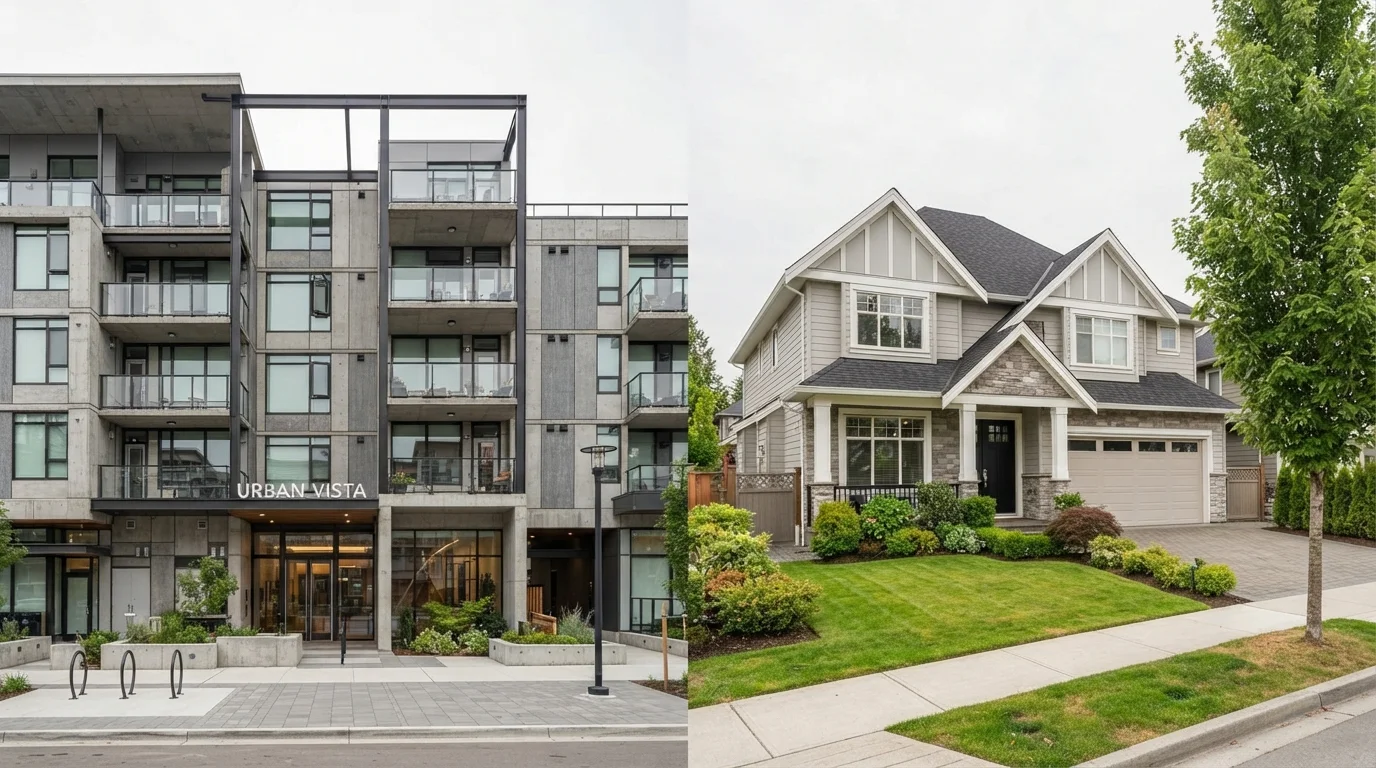
Photo: SmartGlobetrotter.net editorial
Key Takeaways
- Renting typically requires less cash upfront, while buying involves a down payment, closing costs, and ongoing maintenance expenses.
- Homeowners build equity over time, but equity is illiquid and its growth depends on local market conditions.
- Renters carry less financial risk when housing markets decline, but have no claim to appreciation gains.
- The break-even point for buying versus renting varies widely by location, purchase price, and how long you stay.
- Both paths carry hidden costs that many households underestimate before committing.
What each path actually costs upfront
Renting usually requires a security deposit equal to one or two months of rent, plus the first month's payment before move-in. Some markets add a broker fee, but the total cash required rarely exceeds a few thousand dollars.
Buying involves substantially more. A conventional mortgage typically requires a down payment of 3 to 20 percent of the purchase price, and closing costs add another 2 to 5 percent on top of that. On a $350,000 home, a 10 percent down payment plus 3 percent in closing costs means bringing more than $45,000 to the table before the first mortgage payment. Lenders also generally want to see liquid reserves after closing.
These upfront figures are not reasons to avoid buying, but they do set a realistic baseline for what the decision requires in savings. Recurring costs that follow are a separate layer entirely.
Monthly expenses beyond the headline number
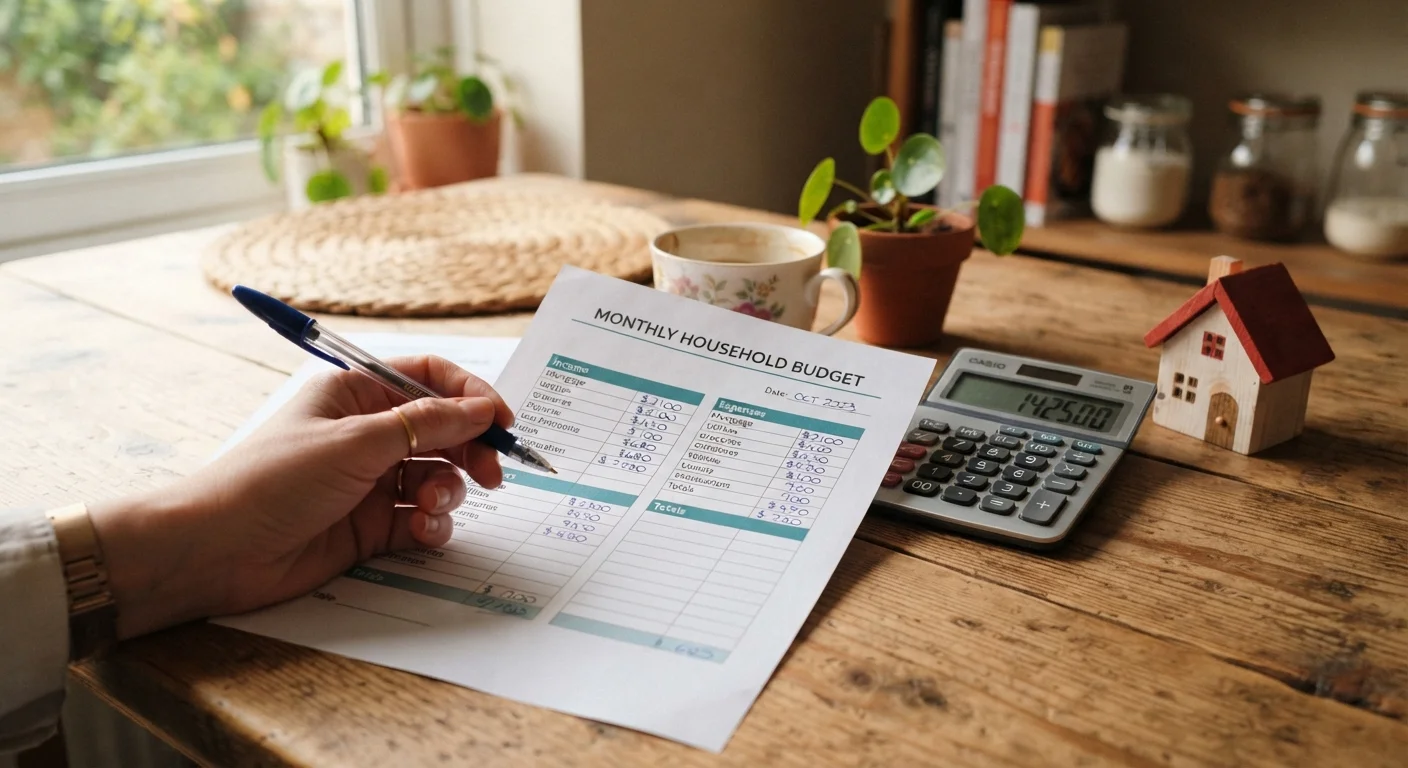
A rent payment covers a predictable monthly cost. Utilities may or may not be included depending on the lease, but maintenance, appliances, and structural repairs are generally the landlord's responsibility.
A mortgage payment is only one component of monthly homeownership costs. Property taxes, homeowner's insurance, and, in many neighborhoods, homeowner association (HOA) fees add to the base payment. Maintenance and repairs are entirely the owner's responsibility; a common planning figure used in personal finance is setting aside roughly 1 percent of the home's value per year for upkeep, though actual costs vary considerably by home age and condition.
Property taxes vary by location
For households building a monthly plan, a structured budgeting approach can help account for both fixed and variable home expenses across either path.
Equity, appreciation, and the limits of both
Owning a home means each mortgage payment reduces the loan balance, gradually increasing the owner's equity stake. If the home also appreciates in value, that equity grows further. However, real estate values are local and cyclical, and appreciation is not guaranteed. Owners in declining markets can find themselves with less equity than they started with.
Equity also requires a sale or refinancing to access. A homeowner sitting on significant paper gains cannot spend that value without taking on new debt or selling the property.
Renters do not build housing equity, but they retain the cash that would otherwise go toward a down payment. Whether investing that cash in other assets outperforms homeownership depends on individual circumstances, market conditions, and time horizon. This is general financial information; a licensed financial adviser can help assess what approach fits a specific household's situation.
| Criterion | Renting | Owning |
|---|---|---|
| Upfront cash required | Security deposit, first month | Down payment plus closing costs |
| Monthly cost predictability | Fixed for lease term | Mortgage fixed; taxes and maintenance vary |
| Maintenance responsibility | Landlord's responsibility | Owner's full responsibility |
| Equity building | None | Yes, over time |
| Flexibility to relocate | High (end of lease) | Low (selling takes time and money) |
| Exposure to market decline | None | Yes, value can fall |
| Ability to customize space | Limited by lease | Owner's discretion |
| Long-term cost trajectory | Rent increases with market | Fixed mortgage; costs still rise with taxes |
The break-even timeline
Buying a home has a break-even point: the length of time it takes for cumulative ownership costs to fall below what renting the same property would have cost over the same period. That calculation includes mortgage interest paid in early years (when most of each payment goes to interest rather than principal), property taxes, maintenance, and transaction costs on both ends of the purchase.
In high-cost markets, the break-even period can stretch to seven years or longer. In lower-cost markets with stable home values, it may arrive sooner. The mortgage interest structure is worth understanding before committing; fixed versus variable rate loans affect how costs behave over that timeline.
Households comparing options should also account for the expenses that frequently go unbudgeted, since those can shift the break-even calculation significantly in either direction.
This article is for general informational purposes only and does not constitute financial, legal, or investment advice. Housing costs and market conditions vary widely by location. Consult a licensed financial adviser or housing counselor for guidance specific to your situation.
The content provided on our blog site traverses numerous categories, offering readers valuable and practical information. Readers can use the editorial team’s research and data to gain more insights into their topics of interest. However, they are requested not to treat the articles as conclusive. The website team cannot be held responsible for differences in data or inaccuracies found across other platforms. Please also note that the site might also miss out on various schemes and offers available that the readers may find more beneficial than the ones we cover.