
Personal Finance From Scratch: A Starter Guide for Adults at Any Age


Photo: SmartGlobetrotter.net editorial
Key Takeaways
- A written budget, even a simple one, gives you more control over where your money goes each month.
- An emergency fund of three to six months of essential expenses can prevent debt when unexpected costs arise.
- Your credit score affects loan terms, rental approvals, and sometimes insurance rates, so it matters even if you rarely borrow.
- Paying more than the minimum on high-interest debt reduces the total amount you pay over time.
- Personal finance decisions depend on individual circumstances; a licensed financial adviser can help with complex situations.
Why personal finance feels complicated
Money decisions touch nearly every part of daily life, from paying rent to buying groceries to planning for an unexpected car repair. For many adults, no one ever walked them through the basics. Financial concepts get dressed up in jargon, and the gap between what people know and what they feel they should know can make the whole subject feel intimidating.
The good news is that the core ideas are not complicated. Most of what you need to manage money day to day comes down to four areas: budgeting, saving, credit, and debt. This guide covers each one in plain language.
This article is general information, not advice
Budgeting: where everything starts
A budget is simply a written plan for your money. It tells you how much comes in, how much goes out, and whether those numbers are in balance.
Start with your net income, meaning the amount deposited into your account after taxes and other deductions. List every regular expense: housing, utilities, food, transportation, insurance, and any debt payments. Subtract total expenses from income. If the result is negative, you are spending more than you earn. If it is positive, that surplus can go toward savings or debt.
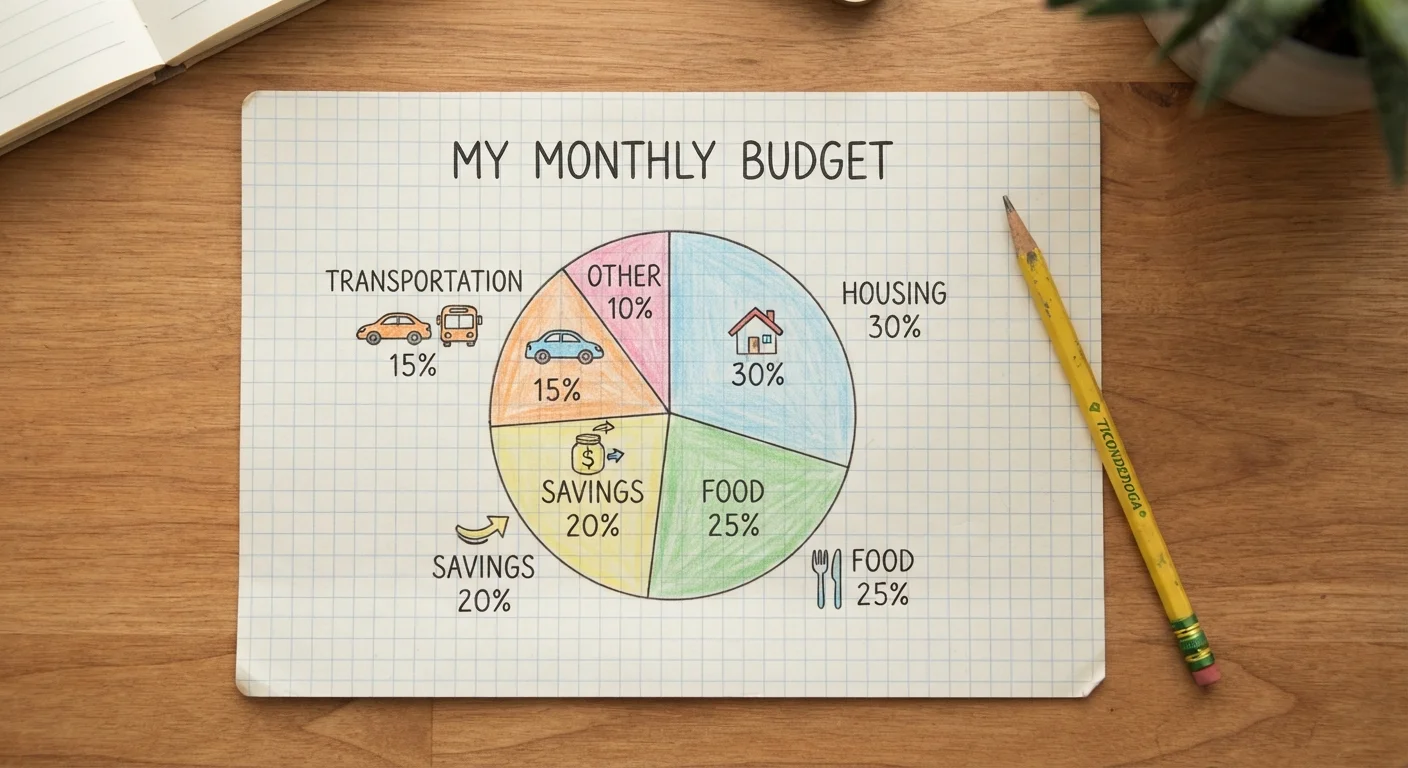
The 50/30/20 guideline is one way to divide income: roughly 50 percent toward needs, 30 percent toward wants, and 20 percent toward savings and debt repayment. Treat it as a starting point, not a strict rule. Your actual breakdown will depend on your income and cost of living.
For a practical walkthrough on putting a budget together month by month, see our guide to building a budget that holds up. If you want to check your habits against common budget pitfalls, habits that quietly undermine a household budget covers patterns that are easy to miss.
Building a savings habit
Automate the habit before you optimize it
Before directing money toward long-term goals, most financial guidance suggests building an emergency fund first. Three to six months of essential expenses is the general target. This cushion means that a medical bill, job loss, or car breakdown does not automatically become new debt.
Keep emergency savings in a separate, accessible account so it is easy to identify and not mixed with everyday spending money. Once your emergency fund is in place, you can turn attention to other goals: a down payment, retirement contributions, or education costs.
Budget
A plan that matches your expected income to your planned expenses for a set period, usually one month.
Emergency fund
Money set aside in an accessible account to cover unexpected expenses without taking on debt.
Credit score
A three-digit number, typically between 300 and 850, that summarizes your history of borrowing and repaying money. Higher scores generally indicate lower lending risk.
APR (Annual Percentage Rate)
The yearly cost of borrowing money, shown as a percentage. It includes interest and certain fees, making it a useful number for comparing loan or credit card costs.
Minimum payment
The smallest amount a lender requires you to pay on a debt each month. Paying only the minimum on high-interest debt can significantly extend repayment time and total cost.
Net income
The amount of money you take home after taxes and other deductions. This is the number to use when building a budget, not your gross or pre-tax pay.
Understanding credit
Your credit score is calculated from your credit history. The factors that carry the most weight are whether you pay bills on time, how much of your available credit you use (called credit utilization), and the length of your credit history.
A higher score generally means lenders view you as lower risk, which can translate to lower interest rates on loans or credit cards. Landlords often check credit before approving a rental application. Some auto insurers use credit-based insurance scores as one input in pricing.
You are entitled to a free credit report from each of the three major bureaus (Equifax, Experian, and TransUnion) through AnnualCreditReport.com. Checking your report regularly lets you catch errors or signs of identity theft.
For plain explanations of terms you will encounter in any financial agreement, reading the fine print covers APR, grace periods, minimum payments, and origination fees in straightforward language.
Handling debt
Watch out for high-interest credit
Not all debt works the same way. A mortgage or federal student loan typically carries a lower interest rate than a credit card. The higher the interest rate, the faster a balance grows if left unpaid.
Two common approaches to paying down multiple debts are the avalanche method (paying the highest-interest debt first while making minimum payments on others) and the snowball method (paying the smallest balance first for a psychological sense of progress). Either approach works; the main thing is consistency.
Paying even a small amount above the minimum each month on a high-interest debt reduces the total interest paid and shortens repayment time. If you carry balances on multiple cards, focus extra payments on the one with the highest APR.
Next steps
Once you have a basic budget and understand how credit and debt work, you can start layering in other financial topics. If your income is fixed or limited, managing money on a fixed income covers strategies for keeping essential expenses manageable. Before the end of each year, a year-end financial checklist can help you review spending and set up the next year on solid footing.
Financial decisions can intersect with other areas of life too. If you are weighing the cost of a vehicle, how auto insurance works can help you understand one of the larger ongoing expenses. Travel costs, including insurance, are covered in the travel section.
This article is for general informational and educational purposes only and does not constitute personalized financial, tax, or legal advice. Consult a licensed financial adviser or qualified professional for guidance specific to your situation.
Frequently Asked Questions
The content provided on our blog site traverses numerous categories, offering readers valuable and practical information. Readers can use the editorial team’s research and data to gain more insights into their topics of interest. However, they are requested not to treat the articles as conclusive. The website team cannot be held responsible for differences in data or inaccuracies found across other platforms. Please also note that the site might also miss out on various schemes and offers available that the readers may find more beneficial than the ones we cover.