
How to Read a Home Energy Audit Report

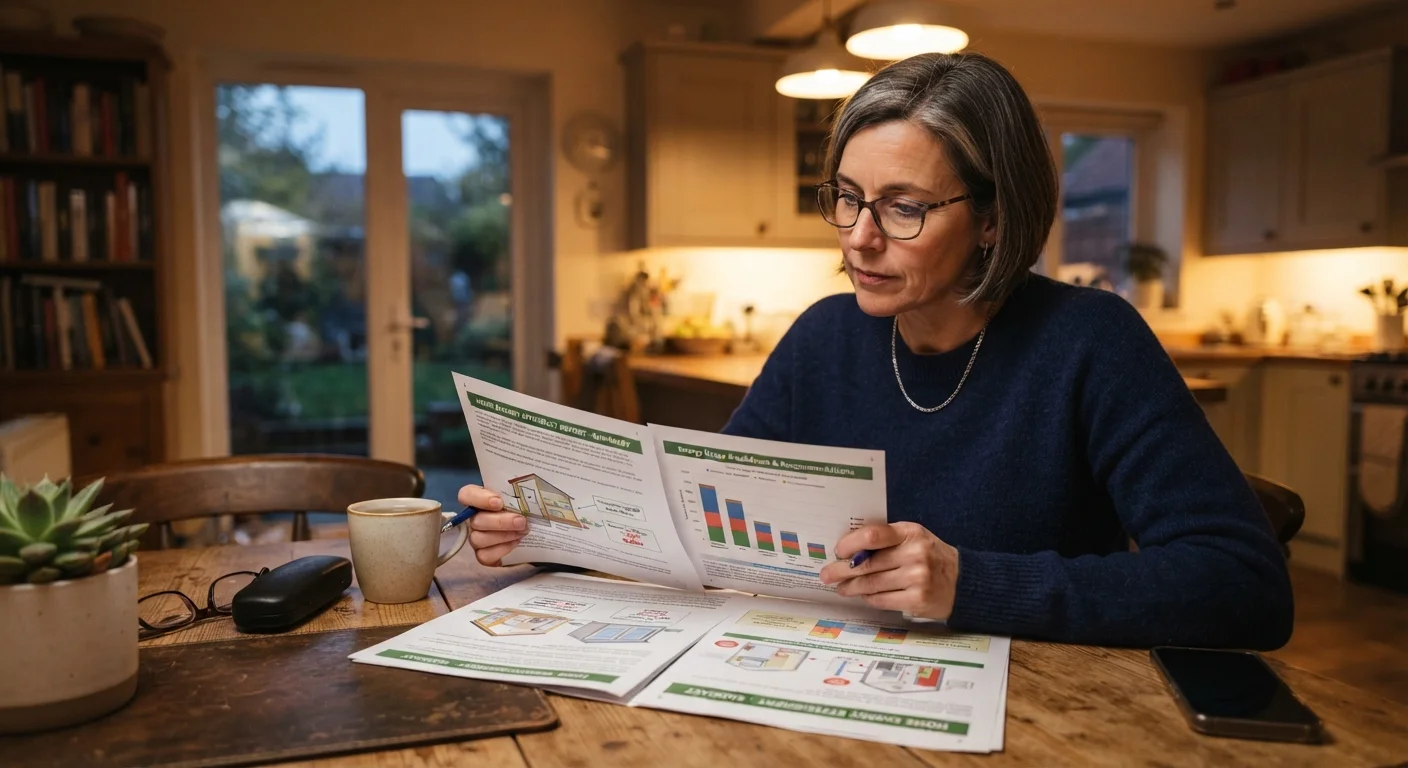
Photo: SmartGlobetrotter.net editorial
Key Takeaways
- An energy audit report grades your home's efficiency and lists specific areas where energy is lost.
- The executive summary tells you your home's overall score; the detail sections tell you why.
- Priority rankings in the report indicate which fixes are likely to reduce costs the most.
- Some findings require licensed contractors; others are simple DIY improvements.
- Comparing your report findings to your current utility plan can help you decide whether a rate change makes sense.
What an energy audit report actually contains
A home energy audit report is a structured document produced after an auditor has inspected your home, measured air leakage, assessed insulation, and reviewed your heating and cooling systems. The report translates those measurements into findings your household can act on.
Most reports follow a consistent structure: an executive summary, a current performance section, a list of recommendations with estimated costs and savings, and sometimes supporting data such as blower-door test results or thermal imaging photos. Knowing which section does which job stops you from reading straight through and missing the parts that matter most.
Reports from auditors certified through programs such as the U.S. Department of Energy's Home Energy Score system may include a numeric score from 1 to 10. That number summarizes your home's energy use relative to similar homes. A score of 5 or below generally indicates above-average energy use, but the number alone does not tell you where losses occur.
If your report was produced as part of a utility rebate program, it may also list which improvements qualify for rebates. Keep that section separate from the general recommendations list, because rebate-eligible work has its own timeline and paperwork requirements.
How to work through the report step by step
What you will need
Read the executive summary first
The executive summary gives you the overall efficiency score or rating and a condensed list of findings. Read it before the detail sections so you have a frame of reference. Note the number of recommendations listed and whether any are flagged as urgent (such as a cracked heat exchanger or evidence of combustion backdrafting).
Review the current performance section
This section documents the auditor's measurements: blower-door test results, insulation R-values by zone, window U-factors, and equipment efficiency ratings. Cross-check the square footage and year-built data against your records. Errors in baseline inputs affect the accuracy of the savings estimates that follow.
Work through the recommendations list
Each recommendation should include a description of the improvement, an estimated installation cost range, an estimated annual energy savings in dollars or therms/kilowatt-hours, and a payback period. Sort these by payback period if the report does not already do so. Create a short list of the three to five items with the shortest payback periods and the highest estimated savings.
Check for rebate and incentive notes
Some reports include a section listing federal tax credits, state rebates, or utility incentives that apply to specific improvements. Federal residential energy efficiency tax credits are governed by IRS rules that change periodically; verify current eligibility at energystar.gov or irs.gov before budgeting. Note any application deadlines listed in the report.
Note any supporting documentation
Thermal images, blower-door graphs, and combustion safety test results may appear as appendices. Thermal images show temperature differences across surfaces, which can help you locate insulation gaps or air leaks visually. If your report includes these, review them alongside the written findings to understand exactly where the problems are located in your home.
Once you have worked through each section, compare the auditor's baseline energy use figures against your actual utility bills. Discrepancies sometimes indicate the auditor used estimated occupancy data. If the numbers differ by more than 15 percent, flag it when you follow up with the auditor or your utility provider. For background on how your current rate structure interacts with usage, see Fixed-Rate vs. Variable-Rate Utilities: What Households Should Know.
Common findings and what they mean for your costs
Air sealing and insulation deficiencies appear in the majority of residential audit reports. These findings describe gaps around windows, doors, attic hatches, and utility penetrations where conditioned air escapes. The report will usually quantify leakage in ACH50, which stands for air changes per hour at 50 pascals of pressure. A typical older home measures between 7 and 10 ACH50; a well-sealed home is generally below 3.
Heating and cooling equipment findings cover age, efficiency rating (expressed as AFUE for furnaces or SEER for central air), and whether the system is properly sized for your square footage. An oversized or undersized system runs inefficiently regardless of fuel cost.
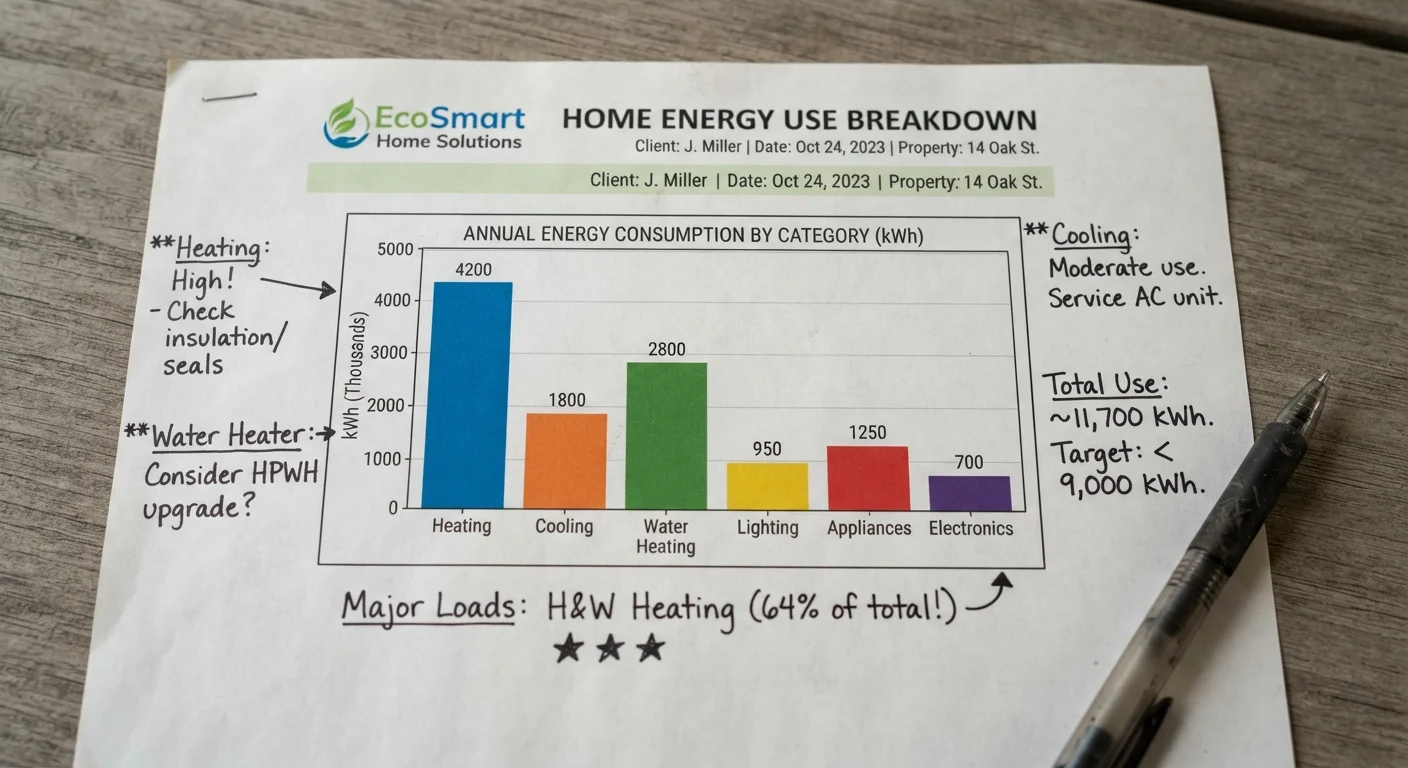
Water heating findings often appear separately, since water heating can account for roughly 14 to 18 percent of a home's energy use according to the U.S. Energy Information Administration. The report will note your water heater's energy factor or uniform energy factor rating and compare it to current standards.
Start with the highest-impact findings
Lighting and appliance findings are usually lower in priority because their cost impact is smaller than envelope or HVAC improvements, but they are also the most accessible for renters or homeowners who cannot undertake structural work.
Turning findings into a realistic action plan
The recommendations section of your report typically ranks improvements by payback period, which is the estimated time for energy savings to offset the cost of the improvement. A shorter payback period means you recover the cost faster. Focus first on items with payback periods under five years, then work outward.
Some improvements, such as adding attic insulation or replacing a furnace, require licensed contractors and may need permits depending on your jurisdiction. Your local building department can confirm permit requirements; do not skip this step for HVAC or structural work. For a broader look at costs that affect your home's financial picture, A Homeowner's Introduction to Property Taxes covers another area where understanding the numbers in a document can affect long-term planning.
Renters who receive audit results should discuss the findings with their landlord in writing. Some states require landlords to maintain minimum efficiency standards; your local housing authority can tell you what applies in your area.
Keep your audit report on file. If you apply for utility rebates, seek financing for energy upgrades, or list your home for sale, the report may be requested as documentation.
The content provided on our blog site traverses numerous categories, offering readers valuable and practical information. Readers can use the editorial team’s research and data to gain more insights into their topics of interest. However, they are requested not to treat the articles as conclusive. The website team cannot be held responsible for differences in data or inaccuracies found across other platforms. Please also note that the site might also miss out on various schemes and offers available that the readers may find more beneficial than the ones we cover.