
Medigap Supplement Plans: What They Cover and When They Make Sense

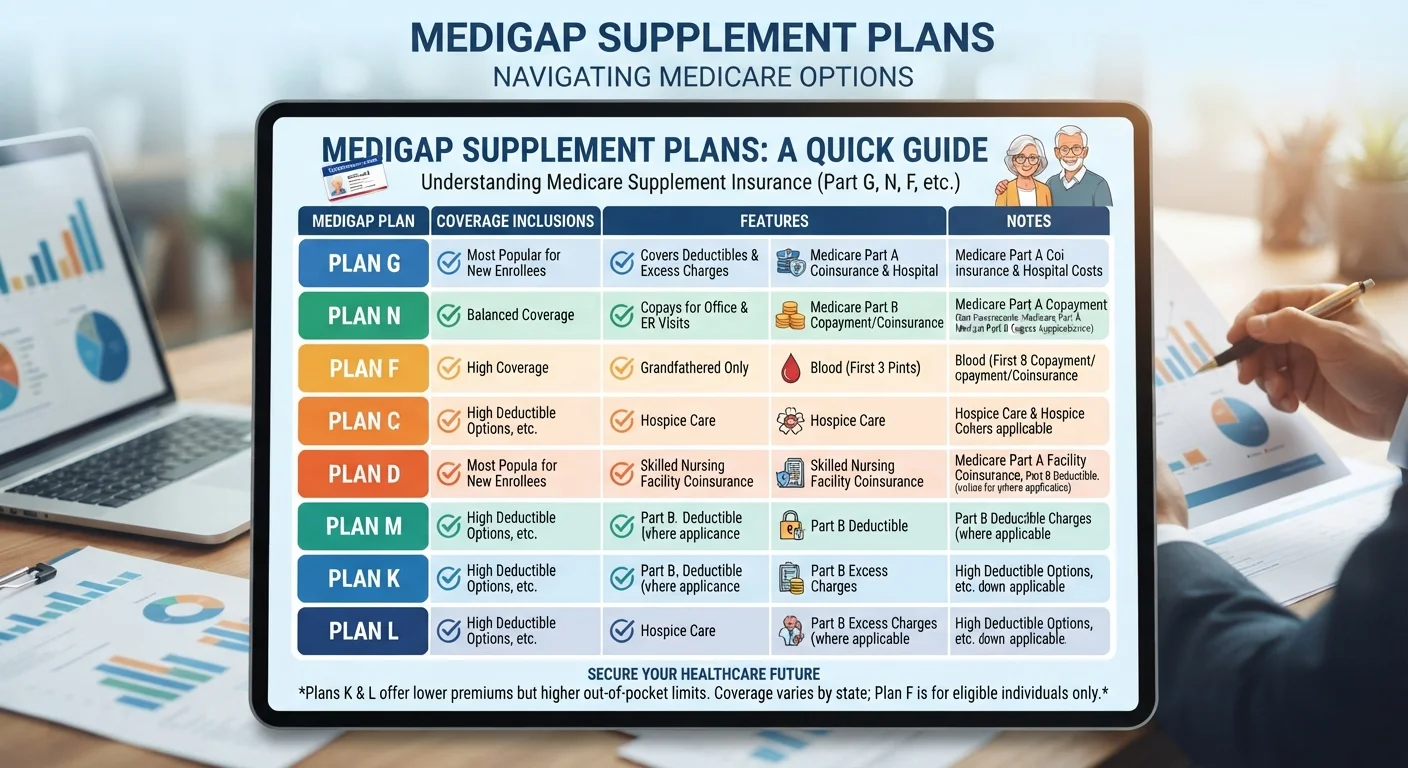
Photo: SmartGlobetrotter.net editorial
Key Takeaways
- Medigap covers cost-sharing gaps in Original Medicare, such as deductibles and coinsurance, but does not add new benefits like prescription drugs.
- Open Enrollment for Medigap begins the month you turn 65 and are enrolled in Part B, giving you guaranteed issue rights for six months.
- Medigap policies are standardized into lettered plan types (A through N in most states), so the same plan letter offers the same core benefits regardless of insurer.
- Medigap and Medicare Advantage are mutually exclusive; you cannot use a Medigap policy if you are enrolled in Medicare Advantage.
- Premiums vary widely by plan type, insurer, location, and how the insurer sets rates over time, so comparing carefully is worthwhile.
What Medigap is and how it fits into Medicare
Original Medicare covers a large share of medical costs, but it does not cover everything. Part A carries a hospital deductible per benefit period, and Part B charges a 20% coinsurance on most outpatient services with no annual cap. For people who need frequent care, those costs can accumulate quickly.
Medigap policies exist to cover those remaining expenses. You pay a monthly premium to a private insurer, and in return the policy pays some or all of the cost-sharing that Original Medicare leaves behind. The coverage works directly alongside Medicare: Medicare pays its portion first, then the Medigap plan covers its share.
Because Medigap does not include drug coverage, most enrollees also carry a Medicare Part D plan. For a broader look at how Medicare parts fit together, see the full Medicare and senior benefits resource.
What the standardized plan letters cover
The federal government standardizes Medigap in most states into lettered plan types. Each letter defines a specific set of benefits, and every insurer selling that plan letter must provide the same core coverage. The premium is the variable, not the benefit structure.
The most commonly purchased plans are Plan G and Plan N. Plan G covers the Part A deductible, Part A and Part B coinsurance, skilled nursing facility coinsurance, and up to $50,000 in foreign travel emergency care (80% after a deductible, up to plan limits). It does not cover the Part B deductible. Plan N covers the same items but requires copayments of up to $20 for office visits and up to $50 for emergency room visits, and it does not cover Part B excess charges.
Plan F, the most comprehensive option, covers the Part B deductible as well, but it is only available to people who became eligible for Medicare before January 1, 2020.

~14 million
Americans with a Medigap policy
According to the Kaiser Family Foundation, roughly 14 million Medicare beneficiaries were enrolled in a Medigap plan as of recent years.
20%
Part B coinsurance with no cap
Original Medicare charges 20% coinsurance on most outpatient services with no annual out-of-pocket maximum, which Medigap can help offset.
6 months
Open Enrollment window length
Federal rules guarantee a six-month Open Enrollment Period starting when a beneficiary is 65 and enrolled in Part B, during which insurers cannot use medical underwriting.
When Medigap tends to make sense
Medigap is not the right fit for everyone. People in good health who rarely use medical services may find that premiums outpace what they would actually owe in cost-sharing during a given year. People who qualify for Medicaid may already have coverage for most of the gaps Medigap addresses.
Medigap tends to be worth evaluating for people managing chronic conditions, those who anticipate hospitalizations or specialist-heavy care, and people who travel internationally and want the limited foreign emergency coverage some plans provide. On that last point, travel insurance for seniors addresses broader travel coverage needs that Medigap does not meet.
People who want more predictable annual health costs also gravitate toward Medigap. Once premiums are accounted for, most plan holders know their maximum annual exposure. That predictability has real value in retirement planning, though a licensed financial adviser or insurance agent is the right resource for decisions specific to your situation.
One limitation to understand: Medigap does not work with Medicare Advantage. If you switch to Medicare Advantage, your Medigap policy becomes useless, and returning to Original Medicare with Medigap later may require passing medical underwriting in most states. The costs that commonly surprise Medicare enrollees covers several of the financial details that catch people off guard during this process.
Enrollment timing and what to watch for
The six-month Open Enrollment Period that begins when you turn 65 and enroll in Part B is the window with the strongest consumer protections. During this period, insurers cannot deny your application or charge you more based on health history. Once it closes, most states allow insurers to use medical underwriting, which can result in higher premiums or denial of coverage.
A few states have additional protections, such as birthday rules that allow annual plan switches without underwriting. Your State Health Insurance Assistance Program (SHIP) offers free, unbiased counseling and is a reliable starting point for state-specific guidance. Contact information for your state's SHIP is available through Medicare.gov.
Premium pricing method matters as well. Attained-age-rated plans may start lower but increase as you age, while issue-age-rated plans lock in rates based on your age at enrollment. Community-rated plans charge the same premium regardless of age. Understanding which structure applies to any plan you consider affects long-term cost projections.
This article is general information about Medicare Supplement Insurance and is not personalized insurance, financial, or legal advice. Coverage details, eligibility, and premiums vary by plan and insurer. Consult a licensed insurance agent or your State Health Insurance Assistance Program (SHIP) for guidance specific to your situation.
Frequently Asked Questions
The content provided on our blog site traverses numerous categories, offering readers valuable and practical information. Readers can use the editorial team’s research and data to gain more insights into their topics of interest. However, they are requested not to treat the articles as conclusive. The website team cannot be held responsible for differences in data or inaccuracies found across other platforms. Please also note that the site might also miss out on various schemes and offers available that the readers may find more beneficial than the ones we cover.