
Your First Time Planning a Trip on a Budget: A Practical Starting Point


Photo: SmartGlobetrotter.net editorial
Key Takeaways
- Budget travel means spending deliberately, not spending as little as possible.
- Setting a total trip number before searching prices gives your planning a concrete target.
- Flight and hotel costs shift based on when you search and when you book.
- Most first-time overspending happens in categories travelers did not plan for at all.
- A savings habit built before the trip makes the budget easier to stick to during it.
What budget travel actually means
Budget travel is not about spending as little as possible. It means deciding in advance how much a trip is worth to you, then spending deliberately within that limit. The traveler who spends $1,200 on a week away and sticks to that plan is budgeting effectively. The traveler who spends $600 but charges $400 of it to a credit card without a payoff plan is not.
That distinction matters because first-time planners often frame budget travel as deprivation: no good hotels, no restaurants, no activities that cost anything. That framing leads to either an uncomfortable trip or a plan that gets abandoned when reality sets in. A more useful frame is conscious spending: you know where each dollar goes before you leave home.
Understanding what shapes your total cost is the logical first step. Trip cost factors every American traveler should understand covers the key variables in detail, from airfare timing to the fees that appear only at checkout.
Total trip budget
The maximum amount of money you plan to spend on a trip, covering every category from transportation to souvenirs.
Shoulder season
The travel periods just before or after a destination's most popular season, when prices for flights and lodging are often lower and crowds are smaller.
Dynamic pricing
A system where prices change based on demand, timing, and availability, common with airlines and hotels.
Travel insurance
A type of insurance policy that can reimburse or cover costs if your trip is cancelled, interrupted, or if you face a medical emergency while traveling.
Resort fee
A mandatory daily charge added by some hotels at checkout, separate from the room rate, that covers amenities like Wi-Fi or pool access.
Setting a realistic travel number
A travel budget has a few fixed parts. Transportation (flights or fuel), lodging, food, and activities account for most of the total. Travel insurance, airport transfers, and incidentals round out the rest. The most common planning mistake is estimating the first four categories and leaving the rest at zero.
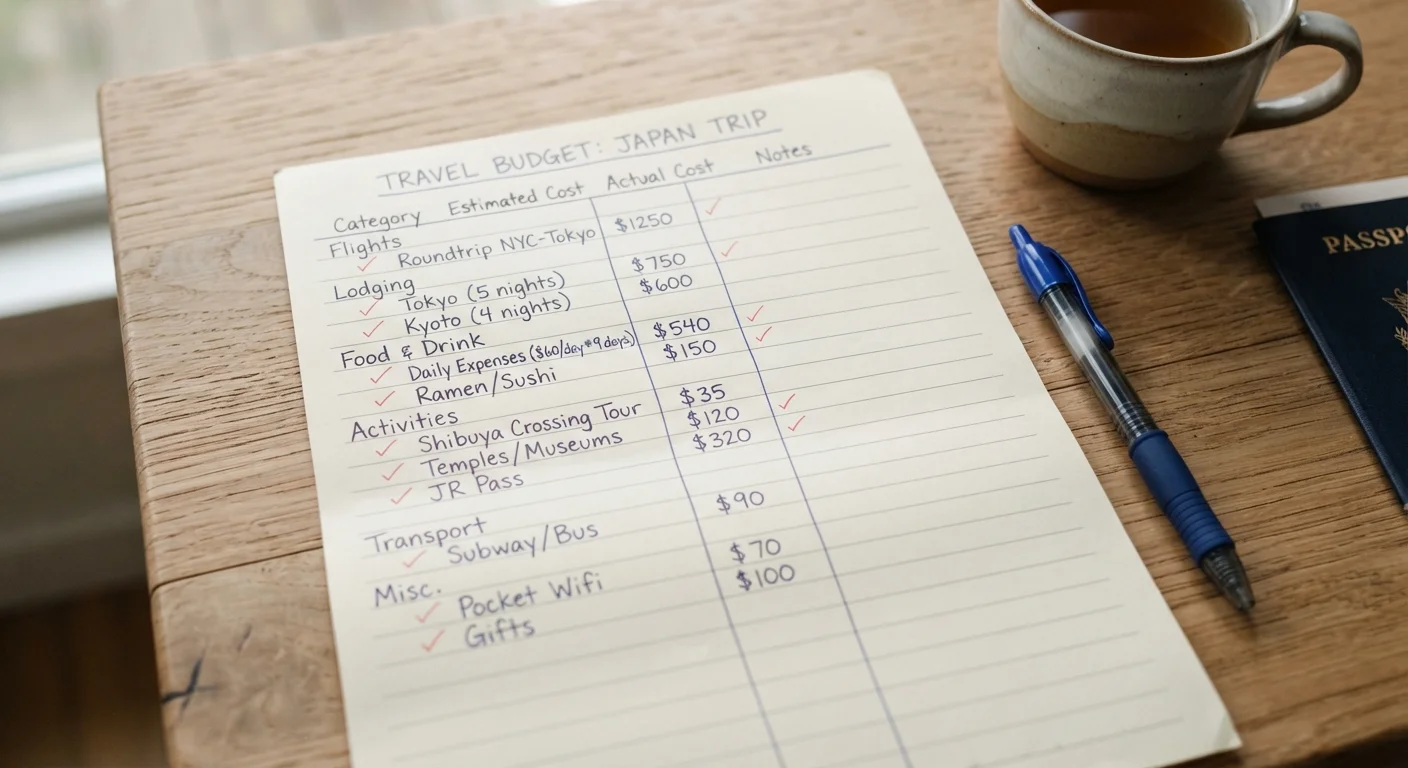
Start by writing down every spending category you can think of for your trip, then assign a rough estimate to each. For a more structured approach to this process, building a trip budget from start to finish walks through each category with realistic ranges and flags the costs most travelers overlook.
Once you have a target number, check whether you can save that amount before your planned departure date. If your monthly savings capacity is $150 and the trip costs $900, you need six months of lead time at minimum. Building a monthly budget that holds up can help you work a travel savings goal into your regular spending plan.
Search prices before setting your budget
How booking timing affects cost
Airlines and hotels use dynamic pricing, which means the same seat or room can cost substantially different amounts depending on when you book. Broadly speaking, booking domestic flights several weeks in advance tends to produce more predictable pricing than booking within a week of departure or during holiday demand spikes. However, these patterns vary by route, season, and year, so no universal rule applies reliably.
Shoulder season travel, the weeks just before or after a destination's most popular period, often comes with lower accommodation rates and shorter lines at attractions. If your dates are flexible, shifting a trip by even two or three weeks can change the cost picture meaningfully.
When deciding whether to book through a travel platform or directly with an airline or hotel, the choice affects more than price. Booking direct vs. using a travel platform explains what each approach changes for the traveler in terms of flexibility, customer service, and fee structures.
Prices change, so verify before booking
Where first-timers overspend
Most first-time budget overruns happen in categories that were never budgeted for at all, not in categories where the traveler spent more than planned. Common gaps include airport parking or rideshares to and from home, checked baggage fees (which vary widely by airline and class), and resort fees that appear at hotel checkout rather than in the advertised rate.
Food costs are also routinely underestimated. Travelers often budget carefully for a few meals and then spend freely on the rest, assuming the amounts are small. Over five or seven days, that adds up. A rough daily food allowance, even a generous one, gives spending a boundary.
Low sticker prices can hide real costs
Activity and entertainment costs are another gap. If you plan to visit attractions, rent gear, or take tours, those costs belong in the budget from the start, not as afterthoughts once you arrive.
Building good habits before your next trip
The planning habits you build for one trip carry over to the next. Tracking actual spending against your budget during a trip, not just before it, gives you real data to improve future estimates. Most travelers find that certain categories (food, transportation within a destination) are consistently harder to control than others.
If managing travel costs feels connected to broader financial habits, a starter guide to personal finance covers the foundational concepts of saving and spending that apply well beyond travel. Similarly, habits that quietly undermine a household budget identifies patterns that erode savings before a trip goal is even reached.
A written post-trip review, even a short one, noting what you actually spent versus what you planned, gives your next budget a more accurate starting point than any general guide can provide.
This article is for general informational purposes only and does not constitute financial or travel advice. Prices, fees, and policies change frequently; verify all costs directly with providers before booking.
Frequently Asked Questions
The content provided on our blog site traverses numerous categories, offering readers valuable and practical information. Readers can use the editorial team’s research and data to gain more insights into their topics of interest. However, they are requested not to treat the articles as conclusive. The website team cannot be held responsible for differences in data or inaccuracies found across other platforms. Please also note that the site might also miss out on various schemes and offers available that the readers may find more beneficial than the ones we cover.